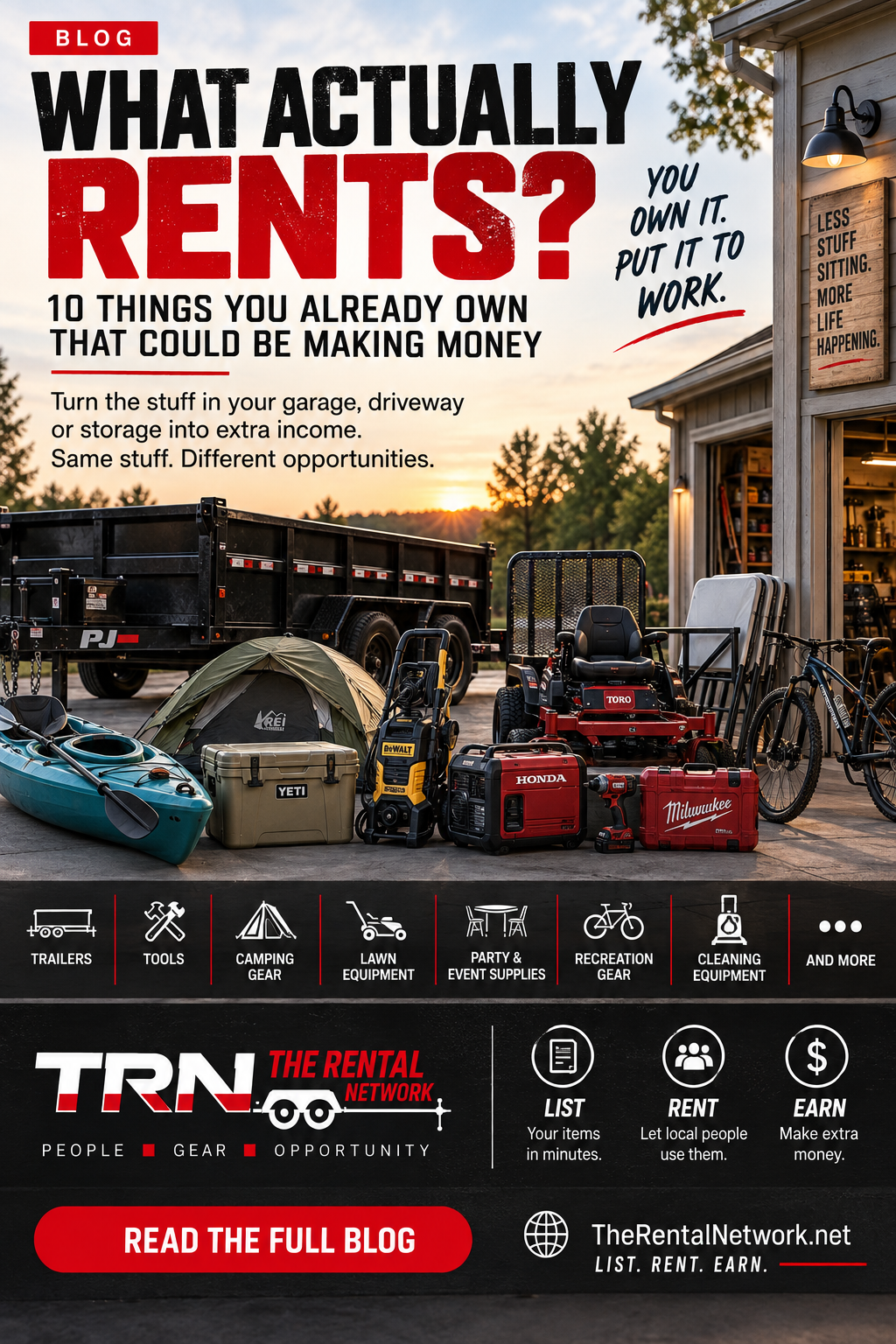
Walk through your garage, shed, basement, or driveway and start adding up what everything cost.
The trailer might have been $4,000. The pressure washer was $500. There’s a $300 carpet cleaner, hundreds of dollars in power tools, camping equipment you use twice a year, and a lawn aerator that gets pulled out for one weekend every spring.
Most of the time, all of it is sitting still.
At the same time, someone nearby needs that exact equipment—but may only need it for a few hours or a weekend.
That’s the basic idea behind The Rental Network: instead of everyone buying something they rarely use, owners can list what they already have and give people nearby the option to rent it.
So what kinds of things make sense to list?
1. Trailers
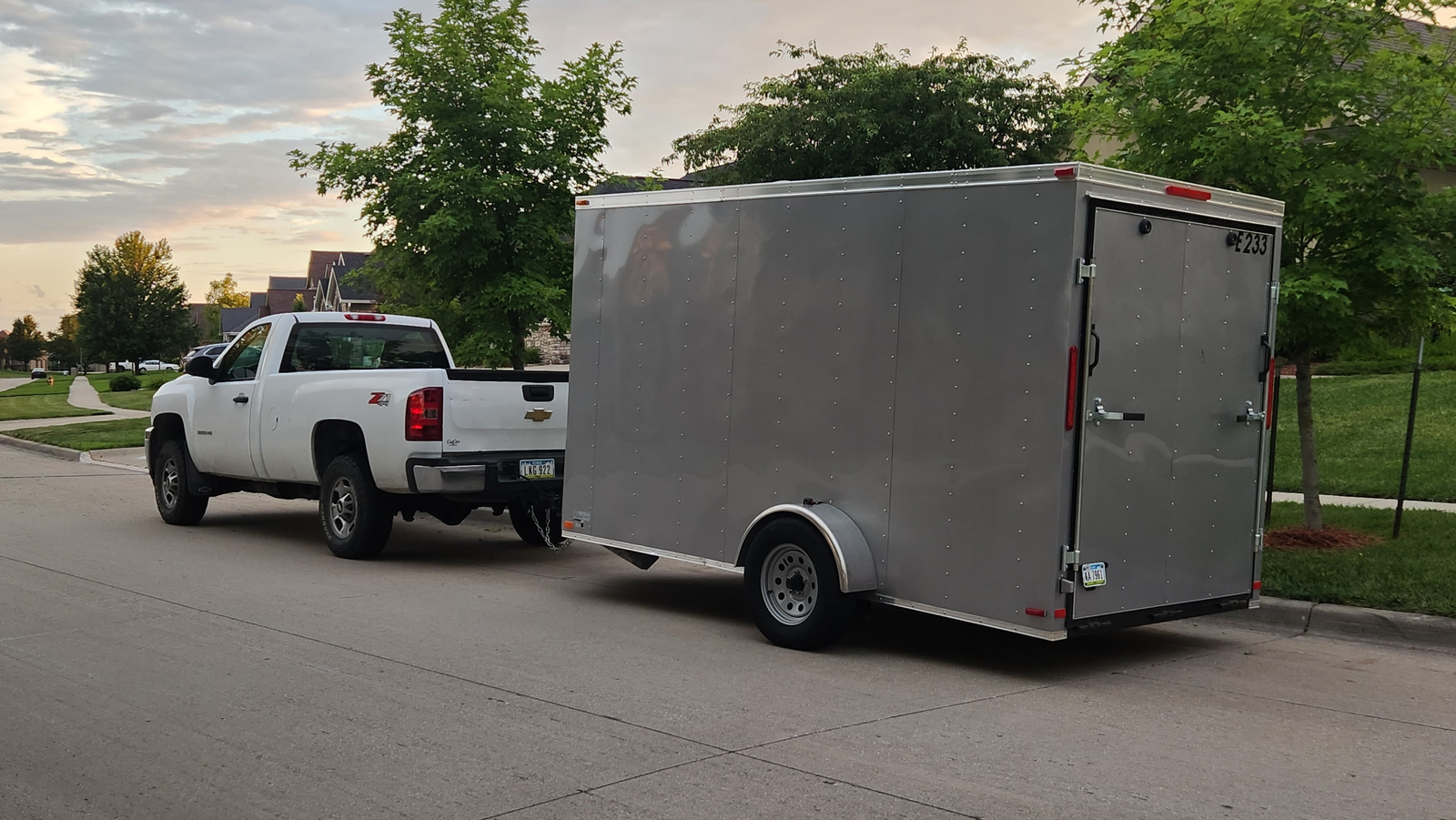
Trailers are one of the clearest examples of an asset that can be useful to somebody else while its owner isn't using it.
Think about how many jobs require a trailer but don't necessarily justify owning one: moving furniture, hauling a mower, picking up building materials, taking debris to the dump, transporting an ATV or moving a vehicle.
Potential listings include utility trailers, enclosed trailers, dump trailers, car haulers, equipment trailers and motorcycle/ATV trailers.
Example economics: If an owner charged $60 per rental day and rented a trailer just four days in a month, that's $240 in gross rental revenue for an asset that otherwise may have spent those four days parked.
That's $2,880 over 12 months if that utilization were consistent.
That isn't a promise of what a trailer will earn—local pricing, seasonality, demand, fees, maintenance and availability all matter—but it illustrates why expensive, infrequently used equipment is interesting in a peer-to-peer marketplace.
2. Pressure Washers
A homeowner may want a pressure washer to clean a driveway, deck or siding.
Then they're finished.
That makes a pressure washer almost tailor-made for renting: the renter needs the result, not necessarily permanent ownership of the machine.
An owner can make the listing more useful by clearly showing PSI, GPM, included hose length, nozzle selection and whether a surface cleaner is included.
3. Carpet and Upholstery Cleaners
This is another classic "I need it today, not every day" item.
People clean carpets before moving, after pets make a mess, before company arrives or during a deep clean.
A good listing should specify whether the machine handles carpet only or also upholstery and stairs, what attachments are included and what cleaning solution is required.
4. Power Tools
A circular saw might be indispensable Saturday morning and completely unnecessary by Sunday afternoon.
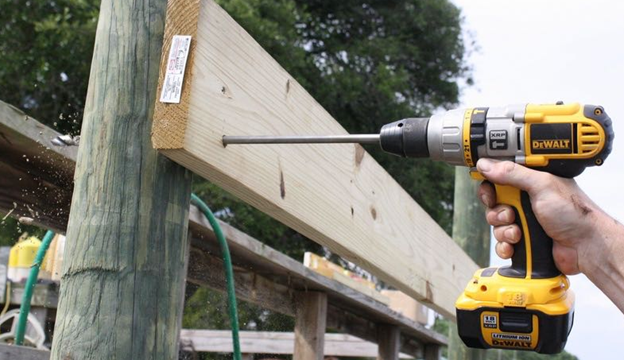
Drills, impact drivers, rotary hammers, demolition hammers, tile saws, miter saws, nailers, sanders and specialty automotive tools all solve relatively specific problems.
And specialty tools can be particularly interesting because the purchase price becomes harder to justify for a one-time job.
An owner could also create a project package rather than listing everything separately—for example, a flooring kit or deck-building tool package.
5. Lawn and Garden Equipment
Think beyond the lawn mower.
Aerators, dethatchers, tillers, post-hole augers, log splitters, brush cutters, spreaders and other equipment can spend most of their lives parked.
Seasonality matters here. An aerator may have a relatively short period of high local demand, while other equipment has a longer usable season.
That makes timing important: have the listing ready before everyone starts the same seasonal project.
6. Moving Equipment
A furniture dolly isn't exciting.
Until you're standing in front of a refrigerator that needs to go down a ramp.
Hand trucks, appliance dollies, moving blankets, ramps, carts and related equipment have a straightforward value proposition: people need them for a particular job and then may not need them again for years.
Better yet, several inexpensive pieces can potentially be offered together as a moving package.
7. Camping and Outdoor Gear
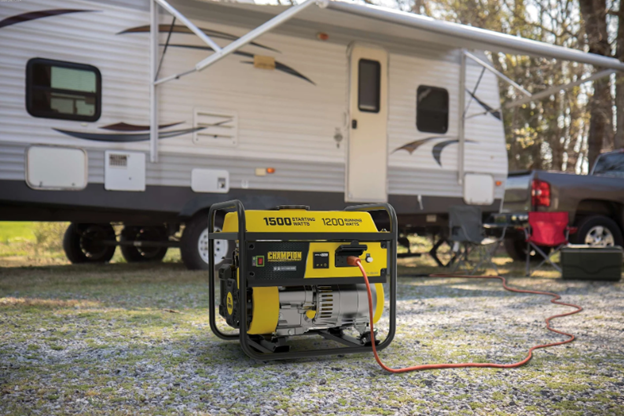
Tents, camp stoves, coolers, portable power stations, sleeping equipment and other outdoor gear can represent a substantial investment.
But not everyone camps enough to justify buying an entire setup.
Someone trying camping for the first time may actually prefer renting equipment before deciding whether they want to own it.
Owners can make these listings more appealing by creating complete packages such as a "Camping for 4" kit rather than requiring a renter to locate every individual piece.
8. Party and Event Equipment
Tables and chairs aren't doing much for their owner when they're stacked in a garage.
But birthdays, graduations, weddings, reunions and neighborhood events continually create short-term needs for them.
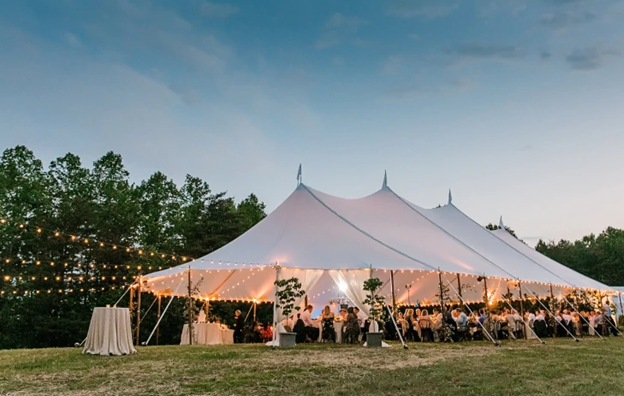
Potential listings include folding tables, chairs, canopies, coolers, portable heaters, speakers, yard games and serving equipment.
These items also have the advantage of naturally renting in multiples or packages.
9. Recreation Equipment
Kayaks, paddleboards, bicycles and other recreational equipment can be expensive enough that occasional users hesitate to purchase them.
Their demand can be highly seasonal and location-dependent, but that's exactly where local peer-to-peer rental can make sense.
Someone may not need a kayak forever.
They may just want two kayaks this Saturday.
10. Automotive and Garage Equipment
This category gets overlooked.
Floor jacks, engine hoists, specialty pullers, diagnostic equipment, ramps, torque tools and other automotive equipment can cost serious money while being needed for only one particular repair.
The more specialized the tool, the stronger the rent-versus-buy question can become.
What Makes Something a Good Rental?
Price alone isn't the key.
A strong rental candidate usually has some combination of four characteristics: it's expensive enough that people hesitate to buy it, useful for short-term jobs, relatively easy to transport, and durable enough to be used repeatedly.
A $5 household item probably isn't worth coordinating a rental.
A $700 machine someone needs for four hours is a very different proposition.
There's also an important distinction for owners:
You don't necessarily need to go buy things to start a rental business.
Start by looking at what you've already paid for.
If it spends most of its life sitting around, the purchase has already happened. Renting creates an opportunity for that existing asset to produce income during periods when you aren't using it.
Pricing Your Item
Don't simply guess at a price.
Look at what comparable equipment rents for in your area, consider the condition and capability of yours, and remember that a renter needs enough savings versus buying to make renting worthwhile.
Also consider longer rentals.
For example, rather than simply multiplying a daily price by seven, an owner might choose to offer more attractive multi-day or weekly pricing. The owner gets longer utilization from one transaction, while the renter gets a better effective daily rate.
The right number will vary significantly by item and market.
Start With Your Garage
You don't need 50 pieces of equipment.
Start with one.
Look around and ask:
When was the last time I actually used this?
If you can't remember, there's a decent chance someone nearby could be getting more use out of it than you are.
Your trailer doesn't know whether it's parked in your driveway or helping somebody move.
Your pressure washer doesn't care whether you're the person pulling the trigger.
And your tools aren't earning anything sitting on a shelf.
That's where The Rental Network comes in.
You own it. Put it to work.
Join. List. Rent. Earn.
TheRentalNetwork.net